
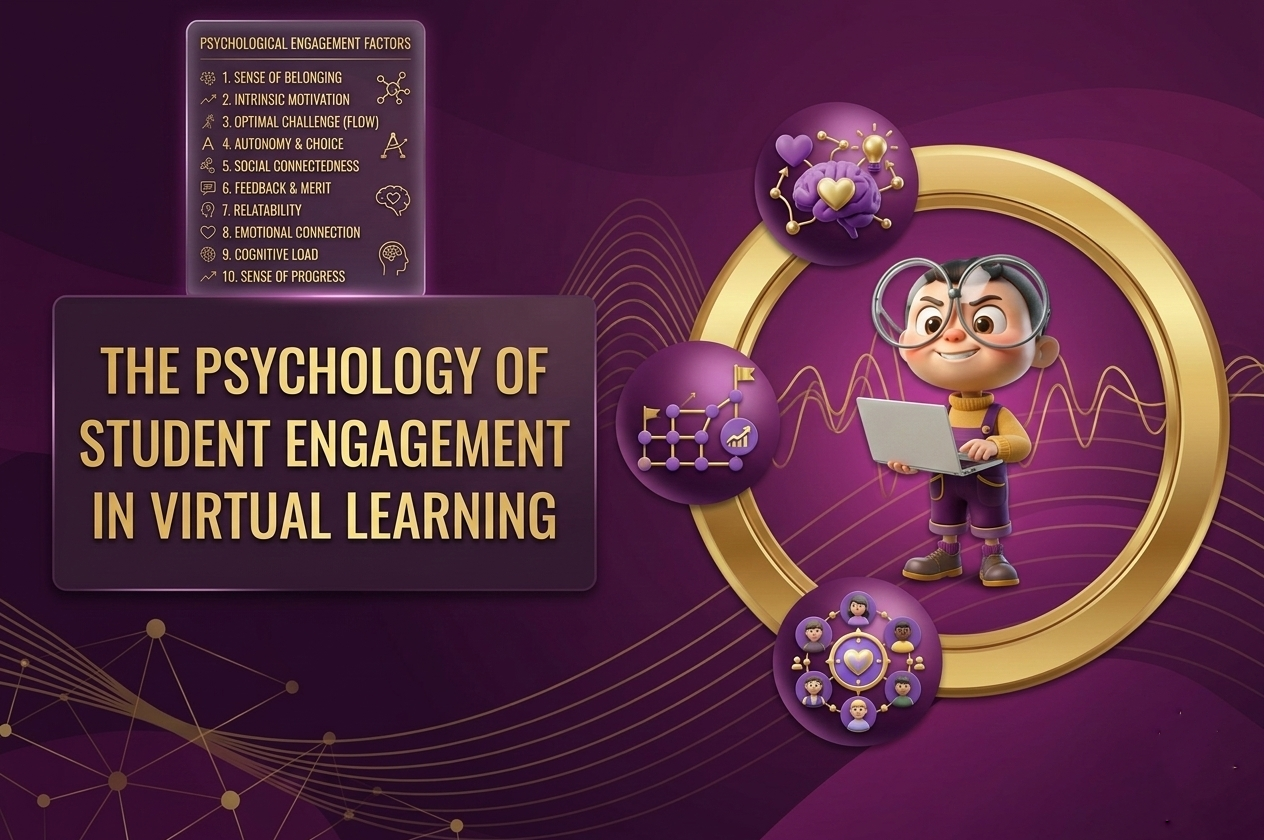
The Psychology of Student Engagement in Virtual Learning
A student logs into a virtual class. The camera is on, the lesson has started, and the teacher is explaining the topic. But after a few minutes, the student begins to check messages, open another tab, or simply stop paying attention.
This situation is very common in online learning. The challenge is not only delivering lessons through technology. The real challenge is keeping students mentally and emotionally involved in the learning process.
Student engagement is not just about being present in class. It is about attention, curiosity, participation, and motivation. When students feel interested and connected to the lesson, they are more likely to learn, remember information, and complete their tasks successfully.
Virtual learning environments such as Simpech Virtual Classroom create new opportunities for education. However, understanding the psychology behind student engagement is what helps teachers design better learning experiences.
What Student Engagement Really Means
Student engagement is often misunderstood as simply attending a class or completing assignments. In reality, it is a deeper psychological process that involves three main elements: behavior, emotions, and thinking.
Behavioral engagement refers to actions like participating in discussions, answering questions, or completing activities. Emotional engagement relates to feelings such as interest, enjoyment, or curiosity about the lesson. Cognitive engagement focuses on how deeply students think about the material and try to understand it.
Educational research explains that engagement includes behavior, emotion, and cognition working together during learning. When these elements are present, students show stronger motivation and better learning outcomes.
In virtual classrooms, these three elements become even more important because students are learning from different environments and may face many distractions.
The Role of Motivation in Online Learning
Motivation is one of the strongest psychological drivers of engagement. A motivated student is more likely to stay focused, ask questions, and complete assignments.
In online learning, motivation often comes from two sources. The first is internal motivation, where students feel curious or interested in the topic itself. The second is external motivation, which includes grades, feedback, or rewards.
Studies show that motivation helps students maintain attention and effort while learning online. When students feel motivated, they are more willing to interact with their teachers, classmates, and learning materials.
Without motivation, even a well-designed virtual class may struggle to keep students involved.
The Importance of Belonging and Connection
Human beings are naturally social learners. Students feel more engaged when they feel connected to their classmates and teachers.
In traditional classrooms, this connection happens naturally through conversation and shared activities. In virtual classrooms, it must be created intentionally.
Psychological research shows that students become more engaged when they experience a sense of belonging and interaction with others. Collaboration, group work, and discussions help students feel part of a learning community.
When students feel connected, they are more confident about sharing ideas and participating in discussions.
Confidence and Self-Belief
Another important psychological factor in student engagement is confidence.
Students who believe they can succeed are more likely to try new tasks and participate actively in class. On the other hand, students who doubt their abilities may avoid participation.
Confidence influences whether students complete assignments, ask questions, or stay involved in the lesson. When learners believe they are capable of understanding the material, they become more motivated to continue learning.
Positive feedback from teachers and clear learning instructions can help build this confidence in virtual learning environments.
The Impact of Attention and Focus
Attention is a limited mental resource. In online learning, students often face distractions from phones, social media, background noise, or other digital tasks.
Because of this, keeping attention in virtual classes requires thoughtful lesson design. Short activities, discussions, and interactive elements help students refocus their attention.
Research on online engagement shows that the learning environment and the way lessons are structured can strongly influence how focused students remain during virtual classes.
When lessons include different activities instead of long lectures, students are more likely to stay mentally engaged.
Emotional Experience in Virtual Classrooms
Emotions play a powerful role in how students learn.
When students feel interested, curious, or excited about a lesson, they tend to stay engaged for longer periods. Positive emotions encourage participation and deeper thinking.
On the other hand, feelings such as stress, confusion, or isolation can reduce engagement. Some students may feel disconnected when learning online, especially if there is little communication with teachers or classmates.
Creating a supportive learning environment helps students feel comfortable asking questions and sharing ideas.
The Role of Autonomy in Learning
Autonomy means giving students some control over how they learn. In virtual education, this can be very powerful.
When students have the freedom to explore topics, choose projects, or manage their learning pace, they often feel more responsible for their progress.
Psychological research shows that autonomy is one of the key needs that supports engagement and motivation in learning. When students feel independent and capable, they participate more actively in the learning process.
Virtual learning platforms can support autonomy by allowing flexible learning paths and interactive learning tools.
Interaction as a Key Driver of Engagement
Interaction is one of the strongest predictors of engagement in virtual learning.
There are three main types of interaction in online education. These include interaction between students and teachers, interaction among students, and interaction with learning content.
When these interactions happen regularly, students feel more involved in the learning process. Research shows that increased interaction leads to higher engagement, satisfaction, and better learning results.
Interactive discussions, group projects, and live questions help transform passive learning into active participation.
Technology and Learning Experience
Technology itself does not automatically create engagement. The way technology is used matters more than the tools themselves.
If a learning platform is difficult to use, students may feel frustrated and disengaged. However, when the platform is simple and organized, students can focus more on the lesson instead of technical problems.
Clear instructions, easy navigation, and reliable digital tools help students feel comfortable in the learning environment. When technology works smoothly, students spend more energy learning instead of solving technical issues.
Virtual learning platforms like Simpech Virtual Classroom support this process by providing structured learning spaces where lessons, discussions, and activities can happen in one place.
Why Engagement Matters for Learning Success
Student engagement is strongly connected to learning outcomes.
When students are engaged, they invest more time and mental effort into understanding the subject. This leads to better memory, stronger problem-solving skills, and improved academic performance.
Engaged learners are also more likely to complete their courses and stay motivated throughout the learning process. In contrast, low engagement often leads to boredom, missed assignments, and reduced learning results.
For this reason, educators and institutions increasingly focus on the psychology behind engagement when designing virtual learning experiences.
Final Thoughts
Virtual learning has transformed how education is delivered around the world. Technology has made it possible for students to learn from anywhere, at any time.
However, successful online education depends on more than technology alone. Understanding the psychology of engagement helps educators design lessons that keep students motivated, connected, and curious.
Motivation, belonging, confidence, attention, and interaction all shape how students experience virtual learning. When these psychological factors are supported, students are more likely to stay involved and achieve better results.
Platforms such as Simpech Virtual Classroom provide the digital space for online education. But meaningful engagement happens when teaching methods align with how students think, feel, and learn.
When virtual classrooms focus on the human side of learning, online education becomes not just accessible, but truly effective.