The Complete Beginner's Guide to Teaching in a Virtual Classroom
Nobody warned teachers that one day they would need to figure out how to hold a student's attention through a laptop screen.
No eye contact across the room. No quick tap on the shoulder when someone zones out. No reading the energy of the class by looking around. Just a grid of small faces on a screen, some with their cameras on, some without, and a teacher trying to make it all feel real and meaningful.
If that sounds familiar, this guide is for you. Teaching online is a skill, and like every skill, it gets better with practice, the right tools, and a little honest advice from people who have already been through it.
The Mindset Shift That Changes Everything
Before getting into tools and tips, there is one thing worth understanding from the very beginning. A virtual classroom is not a broken version of a real classroom. It is its own thing, with its own strengths, its own rhythm, and its own way of working.
Many online learning experiences provide students with the same learning opportunity as face-to-face instruction, just with a different delivery method. The goal is the same. The connection between teacher and student still matters just as much. What changes is how that connection is built.
Teachers who struggle the most with virtual classrooms are usually the ones who try to copy exactly what they do in person and wonder why it does not feel the same. Teachers who thrive are the ones who treat it as a new environment with its own rules, and then learn to play by those rules.
Simpech is designed with this in mind. The platform does not try to copy a physical classroom. It creates something that works specifically online, with tools built for real teachers who are trying to do real work.
Get Your Space Ready Before Your Students See It
The setup behind a teacher matters far more than most beginners expect. Before going live for the first time, take a few minutes to think about what students are actually going to see and hear.
Good lighting is probably the single most important thing to get right. A window behind a teacher creates a dark shadow over the face. Light should come from in front, not behind. A simple lamp facing toward the face makes a big difference. The camera should sit at eye level, not looking up from a desk or down from a high shelf.
Sound matters just as much as video. A teacher's voice is the main tool in a virtual classroom. A cheap headset with a built in microphone is far better than relying on a laptop's built in mic, which picks up every background noise in the room.
Set up a workspace that, if possible, is intended for work only. When a teacher sits in a dedicated space, it signals to the brain that it is time to focus. It also signals the same thing to students. A clean, consistent background tells students that this class is real and worth their attention.
Learn the Platform First, Teach Second
One of the most stressful experiences a new online teacher can have is trying to figure out a platform's features while 20 students are waiting and watching. That kind of stress is completely avoidable.
Definitely make sure to get all the kinks out of your setup in advance. Ask friends or family members to join a video call before class to make sure they can see and hear you without any problems.
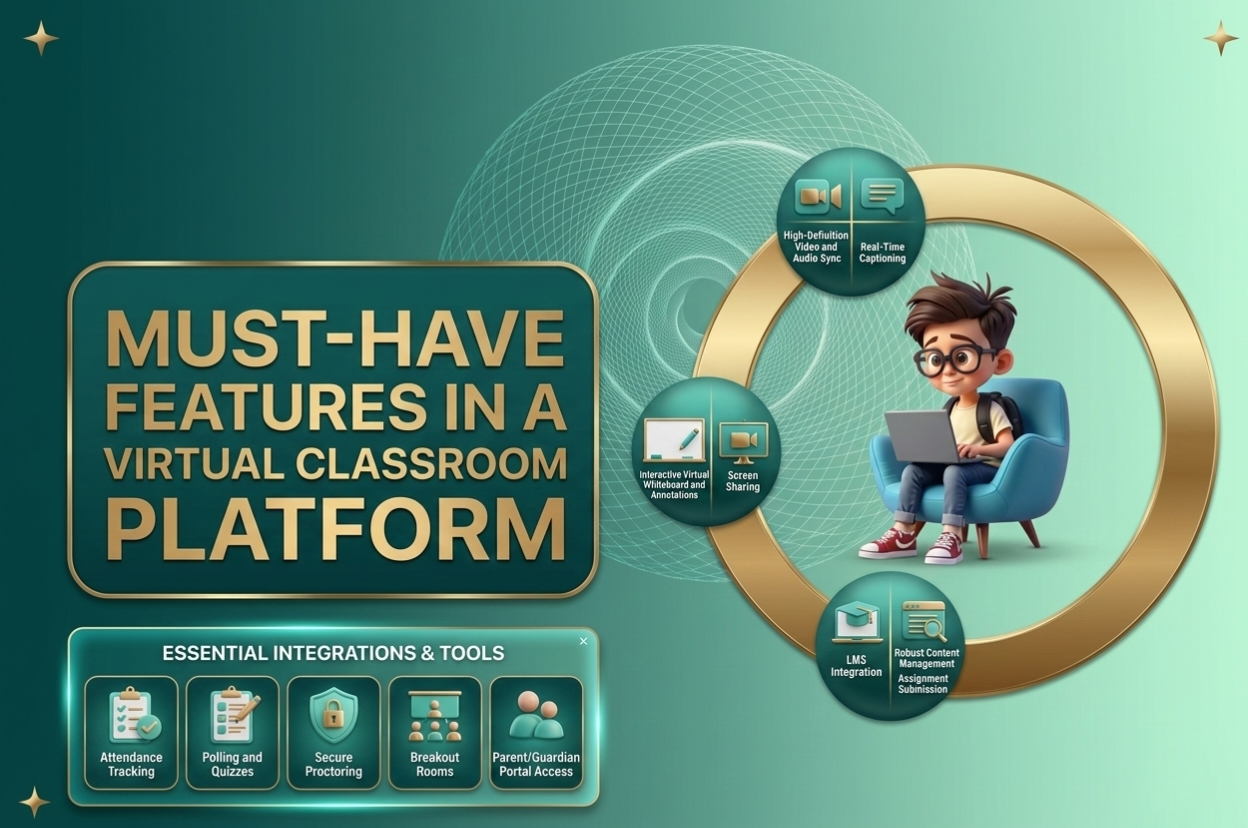
With Simpech, this kind of preparation is actually enjoyable because the platform is genuinely simple to navigate. Teachers can create and launch a virtual classroom room in seconds. The advanced whiteboard supports multiple tabs and different file formats, so switching between a diagram, a document, and a video during one lesson is smooth and easy. The resource drive keeps all teaching materials stored and organized in one central place, so there is no scrambling to find the right file in the middle of a session.
Spend a day or two before the first class just clicking through everything. Try the screen sharing. Send a message in the in-class chat. Record a short practice session and watch it back. That small investment of time saves hours of frustration later.
Set Rules on Day One and Keep Them
It is important to establish a routine on the first day of class, so students know what to anticipate. Laying out classroom rules, setting expectations, and outlining course deadlines early helps students prioritize tasks throughout the term.
In a virtual classroom, rules need to be clear and specific. Should cameras be on during lessons? How should students signal that they want to speak? Is the chat for questions only, or can students use it for general discussion? What happens if the internet cuts out?
These are not difficult questions, but if they are not answered from the start, small confusions can turn into big disruptions. Tell students exactly what is expected, and then hold that line consistently. Students actually feel more comfortable when they know the boundaries.
Simpech's teacher controls feature makes managing a classroom much easier. Teachers have full control over who can speak, who can share their screen, and how the session flows. That kind of control reduces chaos and lets the teacher focus on actually teaching instead of managing constant interruptions.
Break Lessons Into Smaller Pieces
Attention online works differently from attention in a physical room. Students can lose focus faster in a virtual setting, and there is very little a teacher can do to pull them back once they drift.
Break content down by explaining each subject and topic in a brief overview before beginning, so students can identify the important takeaway before the details arrive.
A good structure to follow is teaching for about 10 to 12 minutes, then pausing for a short activity, a question in the chat, or a quick poll. Then return to teaching. This rhythm keeps the brain active and prevents that familiar glazed over look that appears after a long stretch of listening.
Daily discussion questions serve as a consistent engagement tool. Posing a question at the start of each class to review something from the previous lesson and encouraging students to respond in the chat box creates ongoing intellectual exchange.
Simpech's in class chat feature is perfectly suited for this kind of interaction. Teachers can toss out a quick question, watch the answers come in, respond to a few, and keep the energy of the class moving. It is simple, fast, and genuinely effective.
Make Students Feel Seen, Even Through a Screen
The biggest complaint students have about virtual classes is that they feel invisible. Nobody notices if they are confused. Nobody notices if they are struggling. They are just another small square on a screen.
This is something every virtual teacher needs to actively work against.
Learn student names as fast as possible. Call on people by name. Notice when a student who is usually active has gone quiet. Make a point of checking in with students throughout the lesson. Set a positive tone by creating a relaxed sense of community, and always offer support and encouragement.
Show students what proper eye contact looks like through a webcam and practice it when talking to them. Encourage them to smile, respect each other, and talk politely. These small behaviors model the kind of classroom culture that makes students want to show up and participate.
Simpech's analytics dashboard quietly tracks engagement behind the scenes, showing which students are keeping up and which ones might need a little extra attention. Teachers do not have to guess. The data is right there, making it easier to reach out to the right student at the right time.
Use Recorded Sessions as a Teaching Tool
One thing virtual teaching offers that physical classrooms never can is the ability to go back. Every session can be recorded, and that recording becomes a resource that keeps helping students long after the class is over.
Self led or asynchronous formats allow students who have busy schedules to catch up on coursework or lectures at any point before a certain deadline. A student who was sick, confused, or simply needed to hear something twice can go back and watch the session again at their own pace.
Simpech automatically records every session without the teacher needing to remember to press record. Those recordings are stored, easily shareable, and downloadable whenever needed. It is one of those features that sounds simple but saves an enormous amount of time and stress for both teachers and students.
Stay Calm When Technology Misbehaves
Technology will misbehave. The internet will cut out at the worst possible moment. A student's microphone will make a sound that stops the whole class. A file will refuse to open. These moments are frustrating, but they are a completely normal part of online teaching.
Just like in the traditional classroom, teachers adapt and move on if something goes wrong. Set up a mock class and use willing colleagues or family members as test subjects before rolling out new tools with students.
The best response to a technical problem is always a calm one. Let students know what is happening, give them something to do while the issue gets sorted out, and keep moving. Students take their cues from the teacher. If the teacher panics, the class falls apart. If the teacher stays calm and adjusts, students follow that lead.
Simpech provides 24/7 support for exactly these moments. Help is available whenever something goes wrong, which means teachers are never left alone to figure out a problem in the middle of a live class.
Teaching Online Gets Better Every Single Time
It takes time, but it is time well spent when students find great success in their online class.
The first virtual class will probably not be perfect. Neither will the fifth. But by the tenth, something clicks. The rhythm starts to feel natural. The tools feel familiar. The students feel closer, even through a screen.
Simpech is built to support teachers through that entire journey, from the uncertain first login to the confident, smooth classroom experience that comes with practice. It handles the technical side of things so teachers can stay focused on what they actually signed up to do: connect with students and help them learn.
That is what a virtual classroom, done right, looks and feels like.