AI Tutor in Virtual Classrooms: Benefits, Right Uses, and What Teachers Should Know
AI is changing the way students learn online. One of the most useful developments is the AI tutor, a digital learning assistant that can help students understand topics, practice skills, ask questions, and learn at their own pace.
But an AI tutor should not be seen as a replacement for a teacher. Its real value comes from supporting teachers and giving students extra help when they need it.
For virtual classrooms like Simpech, AI tutoring can make online learning more personal, responsive, and accessible.
What Is an AI Tutor?
An AI tutor is a digital assistant designed to support learning. It can explain concepts, answer questions, create practice activities, provide feedback, and guide students through difficult topics.
Unlike a traditional recorded lesson, an AI tutor can respond to a student's specific question.
For example, if a student does not understand a math problem, the AI tutor can explain the steps in simpler language. If the student still struggles, it can provide another explanation or a similar practice question.
This creates a learning experience that can adapt to the student.
Benefits of Using an AI Tutor
1. Students Get Help When They Need It
Students do not always struggle during class.
They may get stuck while completing homework, reviewing a lesson, or preparing for an exam. An AI tutor can provide support outside live teaching hours.
This means students do not have to wait until the next class to ask every question.
2. Learning Can Become More Personalized
Every student learns differently.
Some students understand a topic after one explanation. Others need examples, practice, or a simpler explanation.
An AI tutor can adjust its responses based on the student's questions and progress. This can help create a more personalized learning experience without requiring the teacher to repeat the same explanation to every student individually.
3. It Encourages Students to Ask Questions
Some students hesitate to ask questions in front of their classmates. An AI tutor gives them another place to start.
They can ask basic questions without feeling embarrassed. This can encourage curiosity and help students identify what they do not understand.
4. Teachers Can Save Time
Teachers spend a lot of time answering repeated questions, preparing practice material, and helping individual students.
AI can assist with some of these routine tasks.
For example, it can help students review a concept, generate practice questions, or explain common mistakes. This gives teachers more time to focus on teaching, discussion, feedback, and individual support.
5. Students Can Learn at Their Own Pace
A live virtual class moves at a particular speed.
But students do not all learn at the same speed.
An AI tutor can allow students to review concepts again, practice more questions, or move ahead when they are ready. This can make learning more flexible.
The Right Ways to Use an AI Tutor
Having an AI tutor does not automatically improve learning. How students and teachers use it matters.
Use It for Practice
AI tutors can be useful for active practice.
Students can ask for:
Practice questions
Quiz questions
Examples
Explanations
Step-by-step guidance
Feedback on their work
The goal should be to help students think, not remove the need to think.
Use AI Alongside Teachers
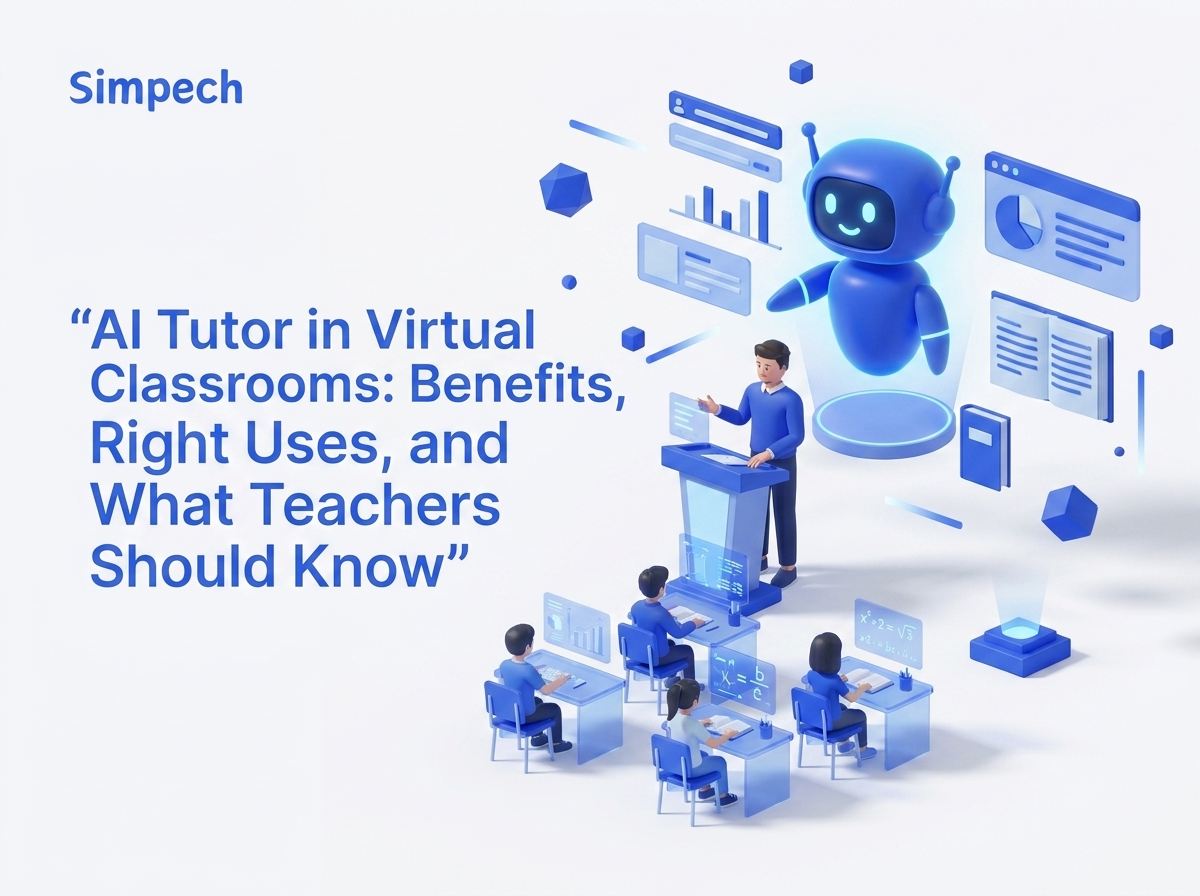
AI should support the teacher, not replace the teacher. Teachers understand their students, classroom environment, learning goals, and individual needs in ways an AI system cannot fully replicate. The strongest model is often a combination of both:
Teacher + AI support + Student effort
Each plays a different role.
Ask Students to Check AI Responses
AI can make mistakes.
Students should not automatically assume that every AI-generated answer is correct. Teachers can teach students how to verify information using textbooks, trusted sources, class materials, and their own reasoning.
This also develops an important skill for the modern digital world: knowing when to question an AI answer.
What AI Tutors Should Not Replace
Technology should make education better, not remove the human side of it.
An AI tutor should not replace meaningful teacher-student interaction, classroom discussions, mentoring, emotional support, or professional judgment. Students also need opportunities to work with classmates, communicate ideas, solve problems together, and receive human feedback. Education is more than delivering information. It is also about building confidence, curiosity, communication, and critical thinking.
How Simpech Can Support AI-Powered Learning
A virtual classroom becomes more useful when learning tools work together instead of forcing teachers and students to switch between multiple platforms. With Simpech Virtual Classroom, teachers can manage live classes, communication, assignments, attendance, resources, and other learning activities from one environment. Adding AI tutoring to this experience can provide students with additional support before, during, and after lessons.
For example, a teacher could introduce a topic during a live class, provide learning resources through the platform, and allow students to use AI support for additional practice and clarification.
The teacher remains at the center of the learning experience while AI provides another layer of support.
The Future Is Not AI vs. Teachers
The more useful question is not whether AI will replace teachers.
It is how teachers can use AI effectively. A good AI tutor can help students practice more, ask more questions, and receive support when a teacher is not immediately available. A good teacher provides context, judgment, encouragement, creativity, and human connection.
Together, they can create a stronger learning experience.
For virtual education, the future is likely to be less about replacing teachers with technology and more about giving teachers better tools to help every student learn.